
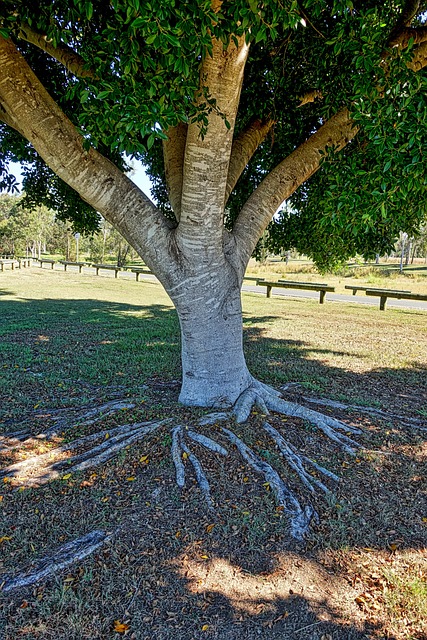
I’m sure you will all agree that trees provide us with numerous benefits, from oxygen production to shade on hot summer days. But while trees bring life and beauty to our surroundings, they can pose a risk when located close to a building. What are some of those risks? In our first article of the month, we will consider a tree’s roots and their potential for damage.
Tree roots grow in search of water and nutrients, spreading in various directions to establish a stable base. As they grow, they can inadvertently encounter and interact with building foundations. The intertwining of tree roots and building foundations can lead to a slow and subtle conflict, with roots exploiting existing weaknesses in the foundation. For example, persistent root pressure against a foundation can cause cracks to form, compromising the building’s structural integrity.
Growing tree roots can also exert pressure on underground pipes, leading to distortion and blockages that may result in plumbing issues. Roots can infiltrate drainage systems, causing clogs and preventing proper water flow, which can lead to flooding and erosion.
Are there any signs to look out for in your home that would indicate tree root damage? Cracks in walls, uneven floors, and jammed doors or windows could be signs of root-related damage to a building’s foundation. On the homes exterior, you may notice bulging sidewalks, warped driveways, and visible root growth near the foundation, which are warning signs of potential structural problems.
Of course, these indicators may also be signs of a different issue and should be diagnosed by a professional. It should also be noted that not all types of trees will cause damage to your home. In our next article, we will consider the effect a tree can have on your home above ground.
